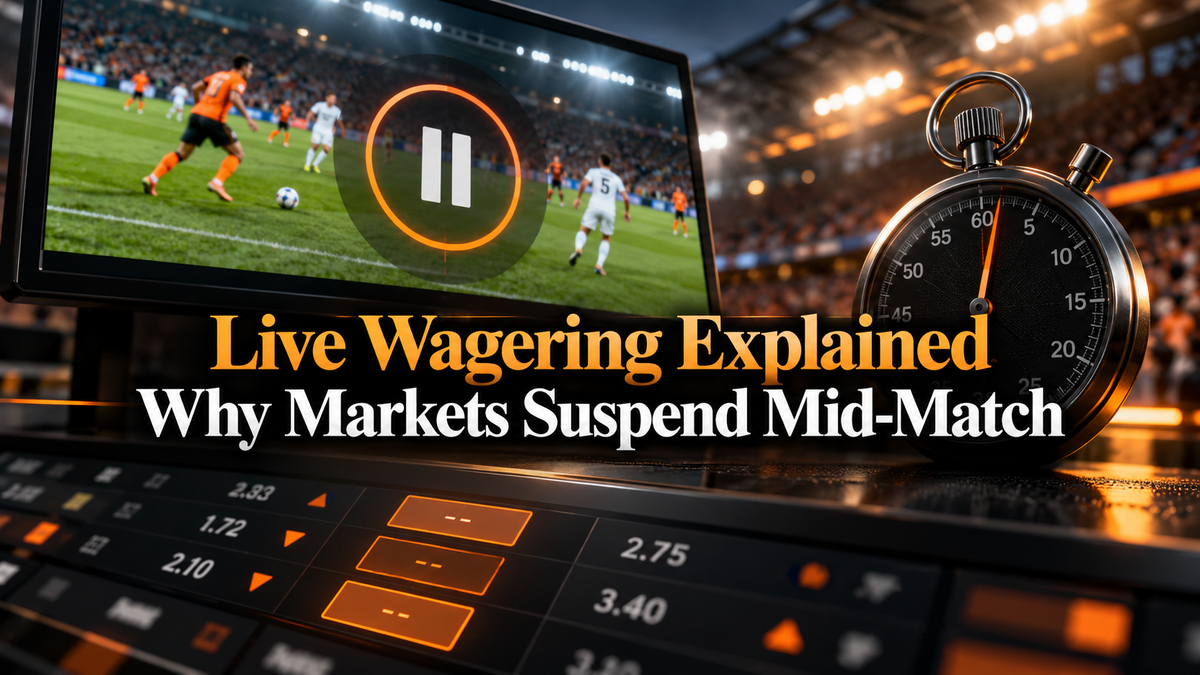
Live Wagering lets you place wagers while a match is in progress, but markets sometimes lock for a few seconds or longer, and that can be confusing. A suspension is a deliberate pause while the operator recalculates prices after a key moment. This guide explains why markets suspend mid-match, how in-play odds are repriced, and what live trading does too.
Key Takeaways on Market Suspension
- A suspension is a deliberate state change, not a crash or a slow connection.
- Goals, penalties, red cards, and video reviews are common triggers.
- Your video stream usually lags behind the real action.
- Markets reopen once new prices are calculated.
- Some suspensions come from data problems, not events on the pitch.
What a Market Suspension Is
In live play, each market has an open state and a suspended state. When a market is suspended, no new selections are accepted, and prices are hidden or frozen until the operator reopens it.
This is a normal safeguard. It is not a sign that something is wrong with your account, and it is applied to every customer at the same moment.
Events That Trigger a Suspension
Operators suspend markets when something happens that could change the odds sharply. Typical triggers include:
- Goals or scoring plays.
- Penalties awarded or about to be taken.
- Red cards and serious injuries.
- Video reviews or referee checks.
- Dangerous attacks that could lead to a score.
The system locks first and recalculates afterward, which keeps prices fair for everyone.
How In-Play Odds Are Repriced
Pricing engines convert the event into new probabilities in seconds. A goal, for example, changes the chance of each result, the expected total goals, and many linked markets.
Traders and automated models check the new prices, and then the market reopens with updated odds. That is why prices after a suspension often look quite different from before.
Why Your Stream Is Behind
Broadcast and streaming delays are larger than most people expect. Cable television can run around 38 seconds behind the live action, and streaming services can lag by close to a minute or more.
By the time a goal appears on your screen, the market has usually already been suspended, repriced, and reopened. This is the main reason operators cannot rely on what viewers see.
Live Trading Behind the Scenes
Live trading is the work of setting and adjusting prices during a match. Automated models handle most changes, while human traders watch for unusual situations and manage risk across the whole book.
Some trading exchanges also add a short delay, from about 1 to 12 seconds, before accepting an order. This gives the market time to absorb new information and prevents anyone from using stale prices.
Suspensions Without an On-Pitch Event
Not every freeze reflects action on the field. A data feed problem, a lost connection, or an integrity check can lock a market without any visible incident.
If a market is suspended and nothing seems to have happened, the cause may be on the operator's side. Waiting for it to reopen is usually the only option.
A Short Example of a Suspension
Imagine a team wins a corner late in the second half. Pricing models may briefly lock the market because a corner can lead to a goal within seconds. The lock lasts only a moment, and play resumes with prices that reflect the new situation.
Now imagine the ball hits the net. The market stays closed while the system updates the score, total goals, and linked markets. Once everything is consistent, the market opens again, often with very different prices than a minute earlier.
Why Reopening Prices Can Look Different
A reopened market reflects the new reality, not the old one. A goal changes the time left, the score gap, and the likely tempo of play, and every one of those changes feeds into the price.
This is why waiting for a reopened market to settle before choosing is usually wiser than rushing in. Prices often move again in the first moments after reopening as the operator reads incoming data.
How to Handle Suspensions Calmly
A few habits make live play less frustrating:
- Expect pauses around goals, cards, and reviews.
- Do not assume your stream shows the current moment.
- Check the price again after the market reopens.
- Avoid rushing a selection just because a market is about to lock.
- Set a budget and a time limit before the match starts.
Live Wagering Suspensions: What to Remember
In Live Wagering, a suspended market is a planned pause that lets operators reprice after goals, cards, or reviews. Your stream runs behind, prices change when markets reopen, and some locks come from data issues. Stay patient, recheck prices, and keep a fixed budget.
This article offers educational information only and does not encourage anyone to play. If play starts to feel out of control, take a break and contact a support organization such as BeGambleAware.org.