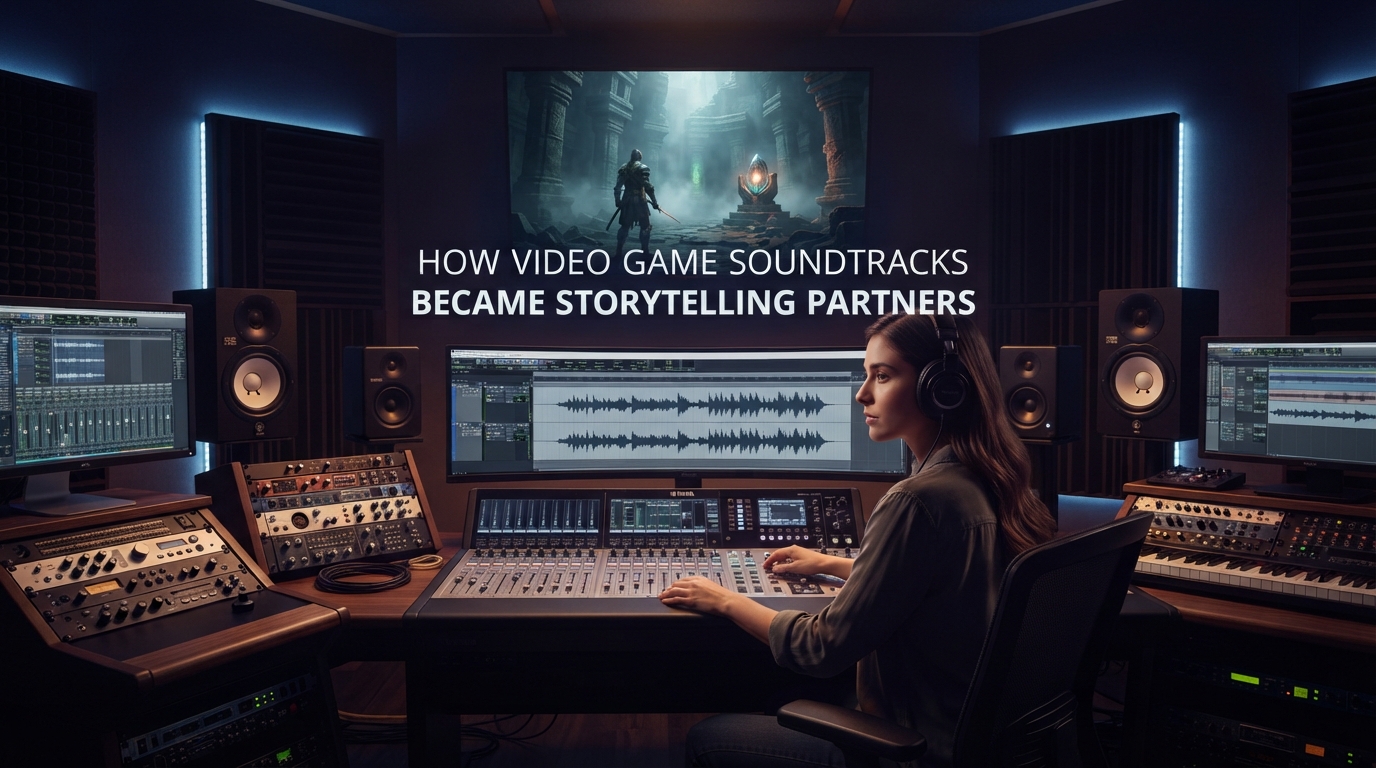
When imaginary worlds are no longer driven by graphics alone, the gaming industry in 2026 has fully elevated music into a true “storytelling partner.” Through cutting-edge technologies like Adaptive Music and Dynamic Music, soundtracks adapt in real-time to player emotions and actions. This article dives into the psychology behind musical scores, procedural audio technology, and the phenomena that allow game soundtracks to embed themselves far deeper into player memories than almost any other medium. Prep your headphones and read on for all the details!
The Evolution from Background Noise to Main Character in the Narrative
Modern game soundtracks no longer serve merely as quiet background accompaniment while we run quests. Today’s game developers and composers design musical scores to act as collaborative storytelling partners that intensify the player’s emotional core in real-time.
As a gamer who has played everything from the retro era to the present day, this shift makes us invest in character fates more than ever before. The way instrumentation shifts based on our decisions generates immense pressure and powerful inner resonance.
The Power of Adaptive Music: A Game-Changing Technology That Will Amaze Gamers
Adaptive Music and dynamic music systems in 2026 are the key drivers ensuring that musical moods flow seamlessly with situational changes on the fly. Whether strolling leisurely through a scenic view or frantically fleeing a boss, the music adjusts its tempo to match the character’s heartbeat instantly.
Key highlights of context-aware music systems include:
- Instantaneous Instrumentation Shifts: Seamlessly crossfading into battle mode without stutters or audio hiccups.
- Stripping Soundscapes Down to Solo Piano: Narrowing emotional focus to a faint, gentle piano melody when a character is critically wounded and on the verge of death.
- Incorporating Choral Harmonies: Amplifying resolve and grandeur during explosive, cinematic climax scenes.
Music That Reflects Character Scars and Inner Secrets
Because game soundtracks have truly become part of the narrative, we understand the motivations of protagonists much better without relying on lengthy dialogue boxes. Wailing violins or deep, vibrating basslines masterfully evoke the darker recesses of the human psyche.
From a firsthand player’s perspective, this fosters a deep bond with the in-game world and its characters, making them feel like close friends. Listening to these tracks independently outside the game effortlessly triggers floods of in-game memories every single time you hit play.
Behind Audio Psychology: Why Short Notes Trigger Fear Better Than Graphics
In 2026, psychoacousticians and composers work closely together to study human brainwaves, allowing game soundtracks to be engineered specifically to “play with the mind.”
- Employing Infrasound Frequencies: Generating sub-audible vibrations that humans may not consciously hear, yet physically feel as a sense of unease and panic.
- Unpredictable Rhythms: Breaking standard rhythmic patterns to trigger primal survival instincts during horror or stealth sequences.
The Role of Sound Design in Creating the Most Powerful “Silence”
Sometimes, “silence” is the best soundtrack. Game developers in 2026 have begun to master the art of cutting out all musical scores at critical moments.
- Creating Emotional Emptiness: Leaving players to face monumental decisions without musical prompting to emphasize isolation and responsibility for the outcomes.
- Amplifying Ambient Audio: Bringing the sounds of breathing, footsteps, or environmental surroundings to the forefront to maximize realism.
The Future of Game Soundtracks: When AI and Players Co-Create Melodies
Artificial intelligence technology now plays a pivotal role in blending real-time musical scores tailored to individual playstyles (procedural audio), ensuring that no two playthroughs feature the exact same soundtrack:
- Playstyle-Driven Personalization: If you play aggressively, AI sharpens the guitar riffs; if you prefer stealth, the music adopts a mysterious and soft tone.
- Personal Identity Creation: Elevating the gaming experience into a masterwork crafted exclusively for you.
The Memory Trigger Effect: Why Game Soundtracks Stick in Human Memory Longer Than Movies
Game music differs fundamentally from other media because players are not merely consumers but active participants, allowing the brain to directly link audio cues with personal experience and emotional investment:
- Forging Bonds Through Sweat and Triumph: When you die repeatedly to defeat the same final boss, the accompanying music becomes permanently etched into your long-term memory.
- Triggering Nostalgia: Hearing just the first notes of a favorite classic game soundtrack enables the brain to recall atmospheres, feelings, and life periods more accurately than old photographs ever could.
When Global Artists Join the Mix: The Cross-Species Phenomenon of Video Game and Mainstream Music
The boundary between video game soundtracks and mainstream music nearly vanished in 2026 as major studios and indie publishers alike recruited global artists to forge innovative storytelling dimensions:
- Lyrical Storytelling: Weaving deeply meaningful vocal tracks into ending credits or major narrative conclusions to summarize core themes and resolve character emotional arcs.
- Elevating Literary Value: Modern game scores are no longer designed solely to back action sequences; they are composed with complex musical structures matching award-winning symphonies or rock albums, easily claiming victories on global music stages.
Instrument Selection and Sound Design: Unmasking the “Dark Core” of Character Psyches
Behind every instrument choice made by modern composers lies deep psychological strategy designed to reflect characters’ fractured mental states:
- Atonal Strings: Avoiding traditional pleasing chords in favor of high-pitched, chaotic violin screeches to simulate a protagonist’s mental breakdown, stress, or depression.
- Sub-Bass Drones: Generating an atmosphere of pressure and insecurity that mirrors the psychological fears characters desperately try to outrun.
Conclusion and Modern Gamer Perspectives: When Music is the “Soul” That Lets Us Co-Exist with Games
The journey of game soundtracks in 2026 proves that music is no longer a mere auxiliary component or expensive decoration, but has risen to become the most powerful storytelling partner and core heartbeat. Technologies like adaptive music and dynamic audio break down the barriers between players and fantasy worlds, translating every step, decision, and loss into seamless emotional waves reaching deep into the human psyche.
Shifts in Modern Gamer Perspectives and Behaviors
- Experiencing Games as Sonic Artistry: Modern gamers look beyond 4K graphics, valuing the emotional dimensions delivered through their headphones. Many soundtracks transform into daily real-life playlists that heal minds, boost work productivity, or establish focus.
- Emotional Anchoring: In-game music acts as a time capsule. Whenever familiar notes strike, the atmosphere, character attachments, and the sweat shed conquering brutal challenges rush back in ways other media cannot replicate.
- Music-Driven Communities: Sharing playlists, decoding musical symbolism, and petitioning for official streaming releases (such as on Nintendo Music and other platforms) have become beloved activities tightening global gaming communities.
In an era where the lines between reality and virtual worlds blur, music serves as the ultimate bridge allowing us not just to play games, but to truly live within their stories. How do you feel about soundtracks taking on primary storytelling roles in modern games, and which game score has ever moved you to tears?